The season.
Aeroforge opens on 27 November. RWCC Circuit Cruisers follows on 1 December, then the Pinnacle Event and a few surprises through 2027.
Until the Aeroforge opening ceremony, 13:10 on 27 November
Flagship, with the Aviation & Astronomy Club
Aeroforge
Every team gets the same motor, speed controller, propeller and servo kit, then designs and builds its own foam glider. The glider hangs from a 0.6 m mast under a motorised carriage on a steel tube about 3 m up. The carriage drives a wheel and the glider’s own propeller pushes too. The aircraft never flies: the track carries its full weight. The mast swings on a pivot, and the pilot steers by banking with the ailerons, like a wind tunnel model on a moving stand.
Lap
1 of 3
Run time
0.0s
Speed
0.0m/s
Bank
0°
Lap distance
0m
Last call
Pinned to the carriage. Go.
The circuit from above. The glider flies a full three-lap run in real time, braking for every corner. Drag the slider to scrub it.
A hundred years of the same idea.
Drag across: the Wright brothers’ 1902 glider, and a 1930s Senior Albatross. Same physics you’ll fight on the circuit: lift, drag, and banking to turn.
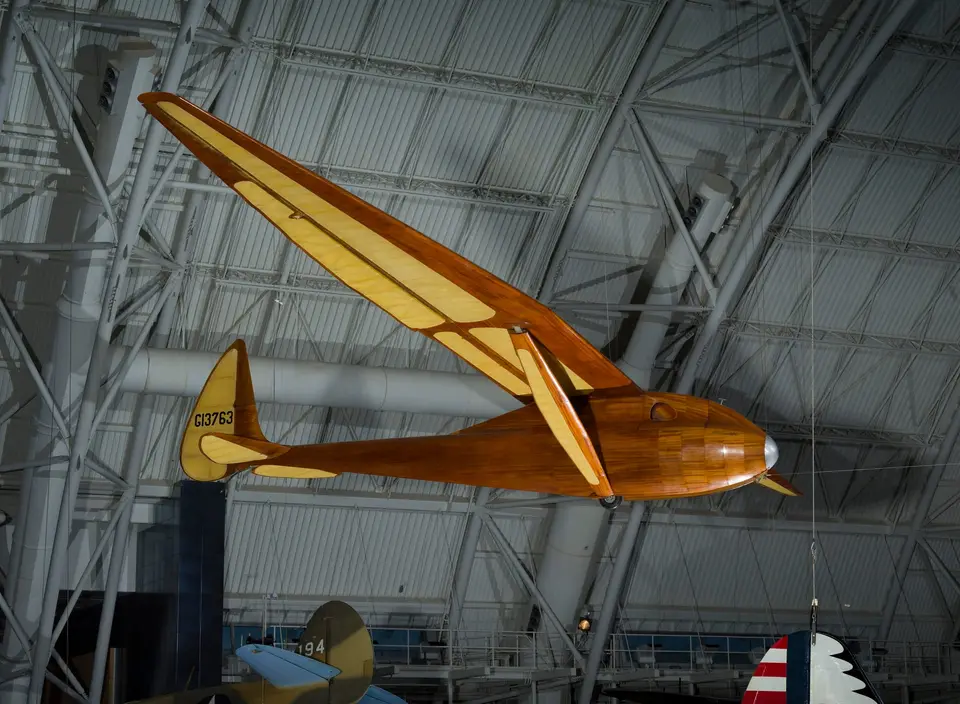
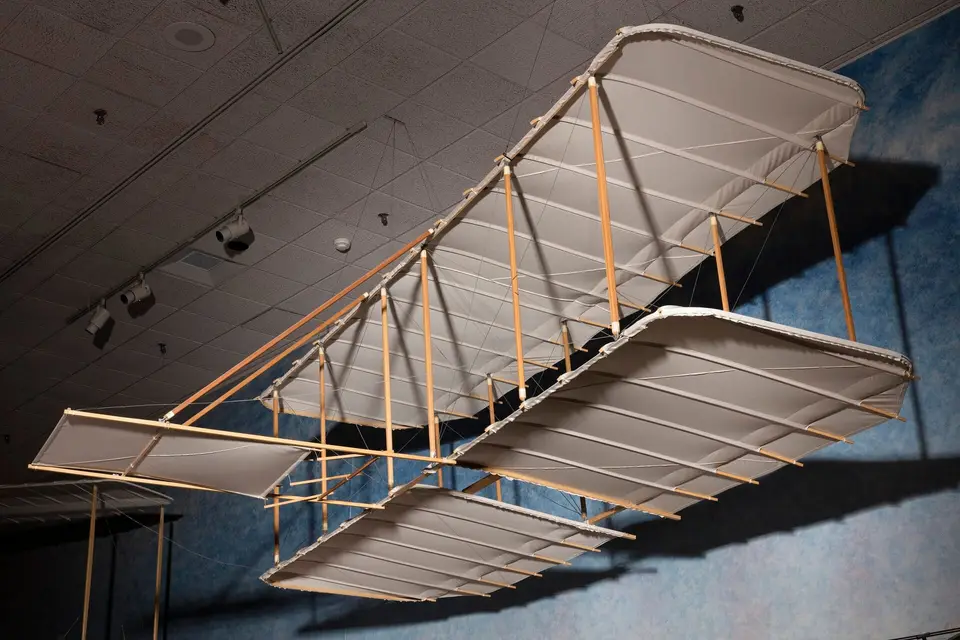
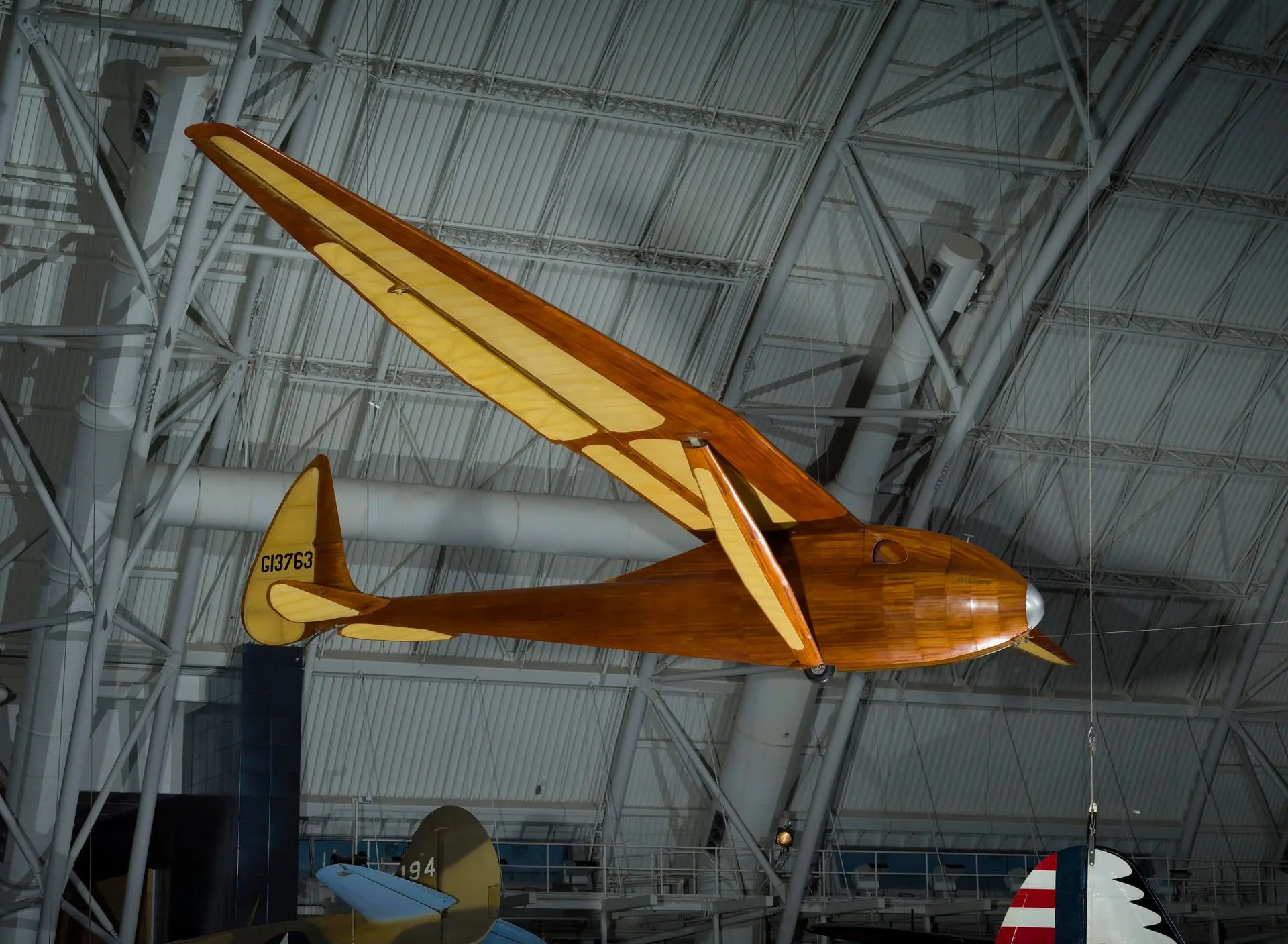
When
Friday 27 and Saturday 28 November 2026 (projected)
Who
Grades 6–12 · about 100 students in 25 teams of 4
Circuit
123 m closed loop, four corners and a chicane, run anticlockwise. Three laps, one team at a time, about 60–90 seconds a run.
Status
Planning. Dates are projected until the school confirms.
One run, three laps.
Laps 1–2
Flying laps. Full speed on the straights, brake for every corner, bank through four knife-edge gates and a four-pole slalom. The faster lap is your sprint time.
Lap 3
Precision lap. Slow to 2 m/s or less through the drop zone, release a 30 g payload onto the floor target, cut the throttle at the line and stop inside the docking bay.
Two days, four phases.
Friday
The Forge
From CAD sketch to a running glider on its mast. Workshops, build sessions and booked practice runs.
Saturday afternoon
Qualifying
Two scored runs per team. The better one ranks the field.
Saturday afternoon
Blackout
Top 16 go through. Gate angles change and the payload gets heavier. 70 minutes to adapt, then re-inspection.
Saturday evening
The Bracket
Head-to-head. Round of 16 and quarter-finals are one run; semi-finals and the final are best of three.
160 points a run.
Weightings are proposed and get fixed after a full rehearsal. A fast but sloppy team should lose to a slower, precise one.
Corner taken too fast (mast hits its stop): −5. Throttle after the lap 3 cutoff: −20. Anything falls off the aircraft: run void.
Sprint (faster of laps 1–2)
Obstacles (−2 per gate or pole contact)
Drop zone discipline
Payload accuracy
Docking precision
Head-to-head bonus (bracket)
Five awards.
Grand Champion
Wins the bracket final
Fastest Lap
Best single flying lap, all teams
Precision Trophy
Best payload + docking score, all teams
Best Engineered
Design notes, CAD and build quality, all teams
Best Adaptation
Biggest jump after Blackout, top 16
CAD dates: coming soon.
Airframes are hand-built from foamboard and spars. CAD is only for aerodynamic extensions: winglets, nose cones, fairings, wingtips. Advanced teams have open CAD access, intermediate on request, beginners build from the reference design. Every CAD part is vetted by a T&H OT member before it is printed.
New CAD submission dates are being set now that Aeroforge has moved to 27–28 November. Follow @giis.roboticsclub for them.
Team registration is not open yet. It is separate from OT applications. Follow @giis.roboticsclub for the sign-up link.
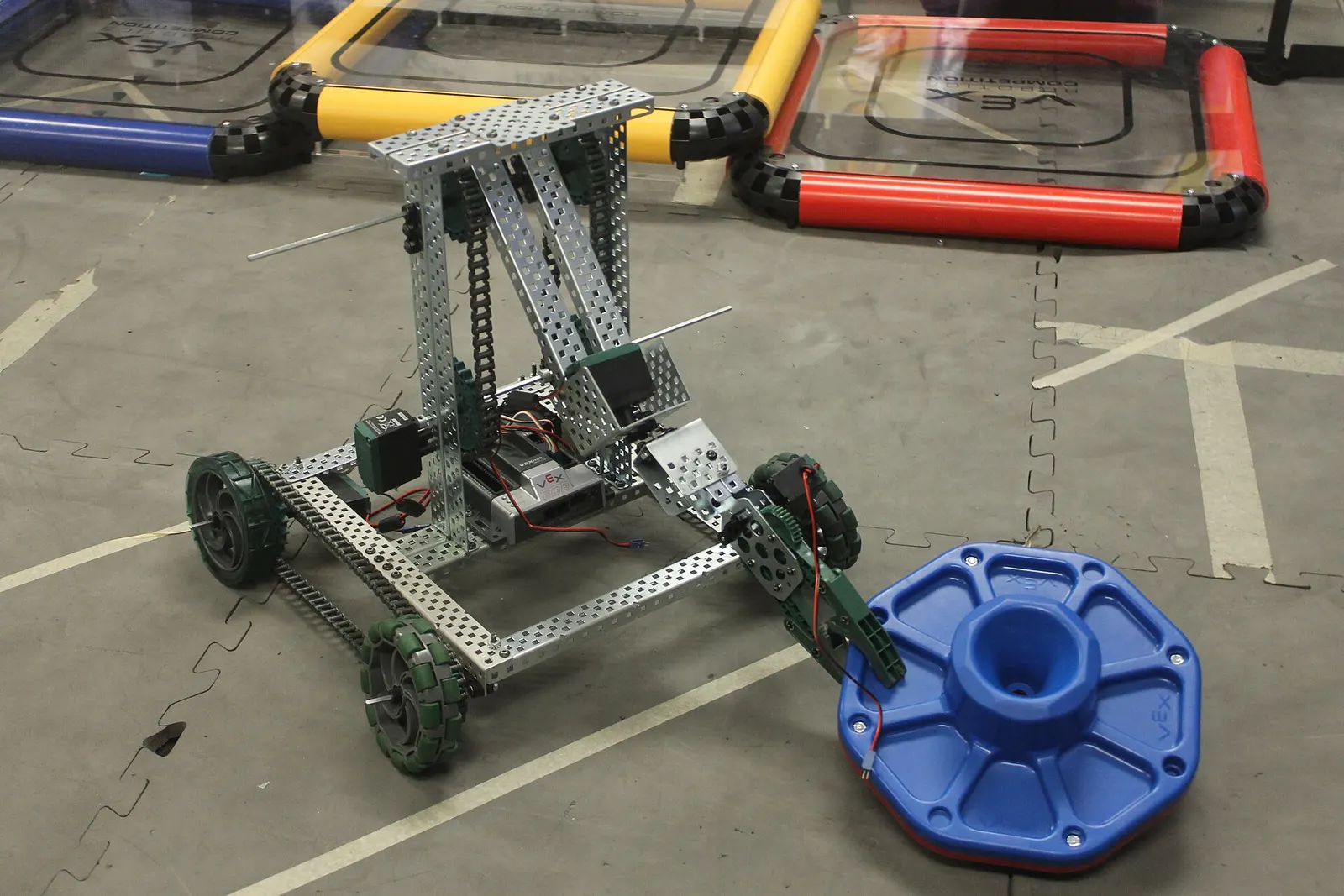
What every team works with
Pink parts are the only ones teams may design in CAD.
Flagship, confirmed
RWCC Circuit Cruisers
The robotics event at RWCC 2026. Teams of up to three build an autonomous robot that finds its own way through a 1.5 m maze. Fastest clean run wins.
Led by Tech & Hardware + Event Management · 1–3 Dec 2026
RWCC runs Tuesday 1 to Thursday 3 December 2026 at GIIS SMART Campus. Circuit Cruisers is on site on Tuesday 1 December.
One maze, no remote.
Build, wire and program a robot around a microcontroller such as an Arduino, with sensors to read the walls and path. It starts in the start box and has to reach the exit on its own: no remote, no outside communication. Bring it pre-assembled; at least one team member has to be there for the final run.
Middle School (Grades 6–8) and Secondary (Grades 9–10) · teams of up to 3 · 2 teams per category per school
RWCC 2026 theme: VISION for the Future: Values, Innovation, Sustainability, Impact, Opportunity, Networking
- Size
- Fits inside 200 × 150 × 100 mm (L × W × H)
- Arena
- 1.5 × 1.5 m maze, 300 mm lanes, 100 mm walls
- Time limit
- Over 10 minutes and the run is out
- Touches
- 3 manual touches. Each puts the robot back at its last milestone; a 4th disqualifies
- Built by you
- Made under your teacher-in-charge, who confirms it is the team’s own work. Outside help on the day disqualifies
- Finals
- Teams that finish the maze go to a viva on their design
100 points.
Damaging a wall: −5.
One on-the-spot event per student at RWCC, so Circuit Cruisers can’t be paired with another on-site event. Every participant gets an e-certificate; trophies are for the on-site events.
Completing the maze
Idea & design
No wall or obstacle hits
Viva
Holding 5 s on each black spot
Flagship, planning
Pinnacle Event
The flagship of 2026-27. The event the whole year is built toward. Details dropping soon.
Led by All departments · Date TBC
Your season.
Pin the events you’re coming to and they move to the top. More is on the way this season. Follow our Instagram so you hear it first.
All Items
Aeroforge
27–28 Nov · with the Aviation & Astronomy Club
RWCC Circuit Cruisers
Tech & Hardware + Event Management · 1–3 Dec 2026
Pinnacle Event
All departments · Date TBC
More, still classified
Lands on Instagram first
Blueprint, last season
Completed